Lyft
The ride ends. The journey doesn’t.
A safety check-in concept for the last stretch between a shared bike station and home.
Assignment contextEverything Is Media · Miami Ad School
CreditsTeam project: Anton, Aina and JD, as credited on the final board.
Work presentedTeam campaign and service proposal. Implementation and launch are not documented.
Assignment & brand
The starting point.
Extend the usefulness of Lyft’s shared-bike service beyond the docking station. The team developed a branded service idea and a communication system that could live inside the existing app and across social and outdoor media.
Insight & approach
The thought behind it.
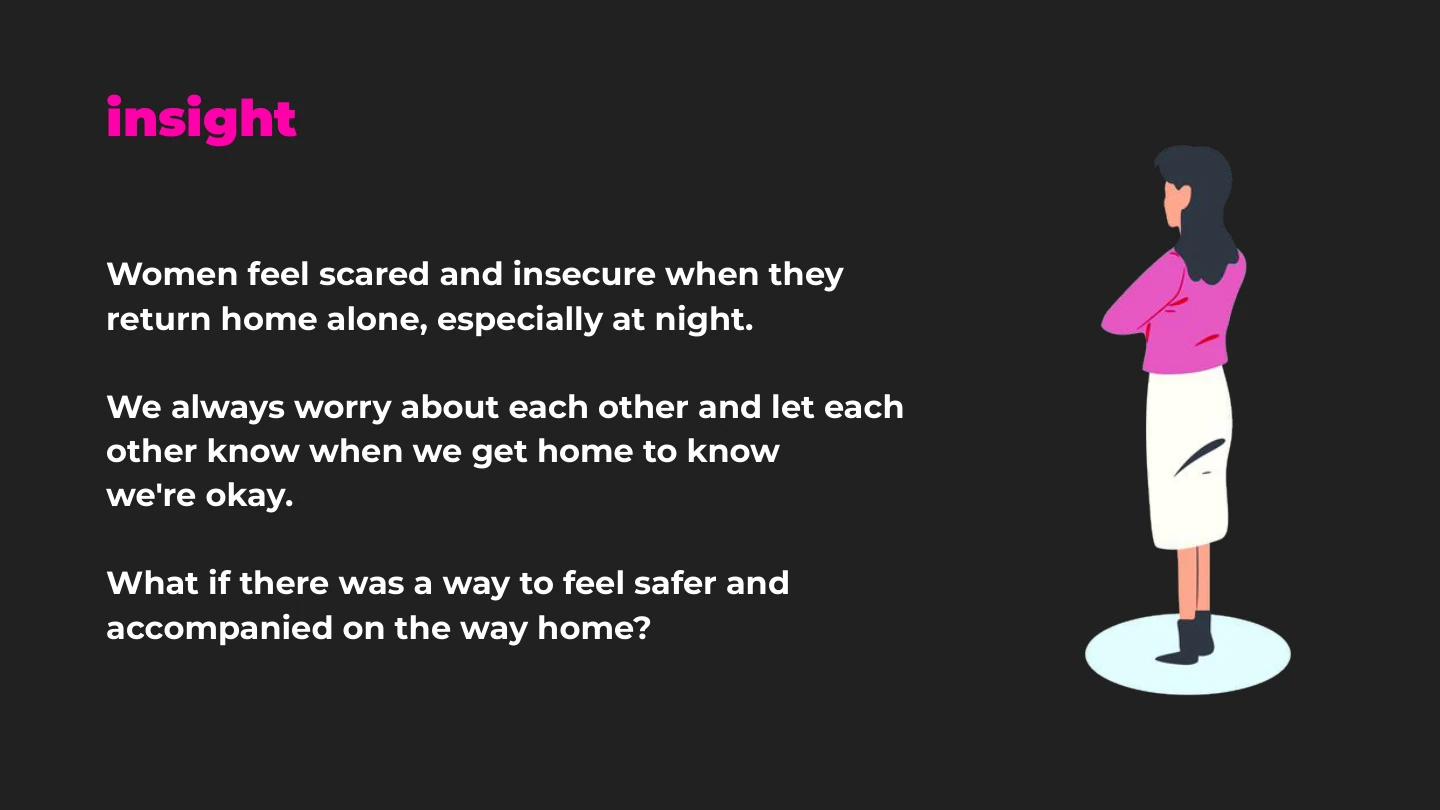
The deck starts with a familiar ritual: letting someone know you made it home. It identifies a gap between the end of a bike rental and the end of a person’s journey, particularly when walking alone at night. This is the team’s stated strategic premise; the retained work does not include a separate field-research study.
Concept & execution
How it takes shape.
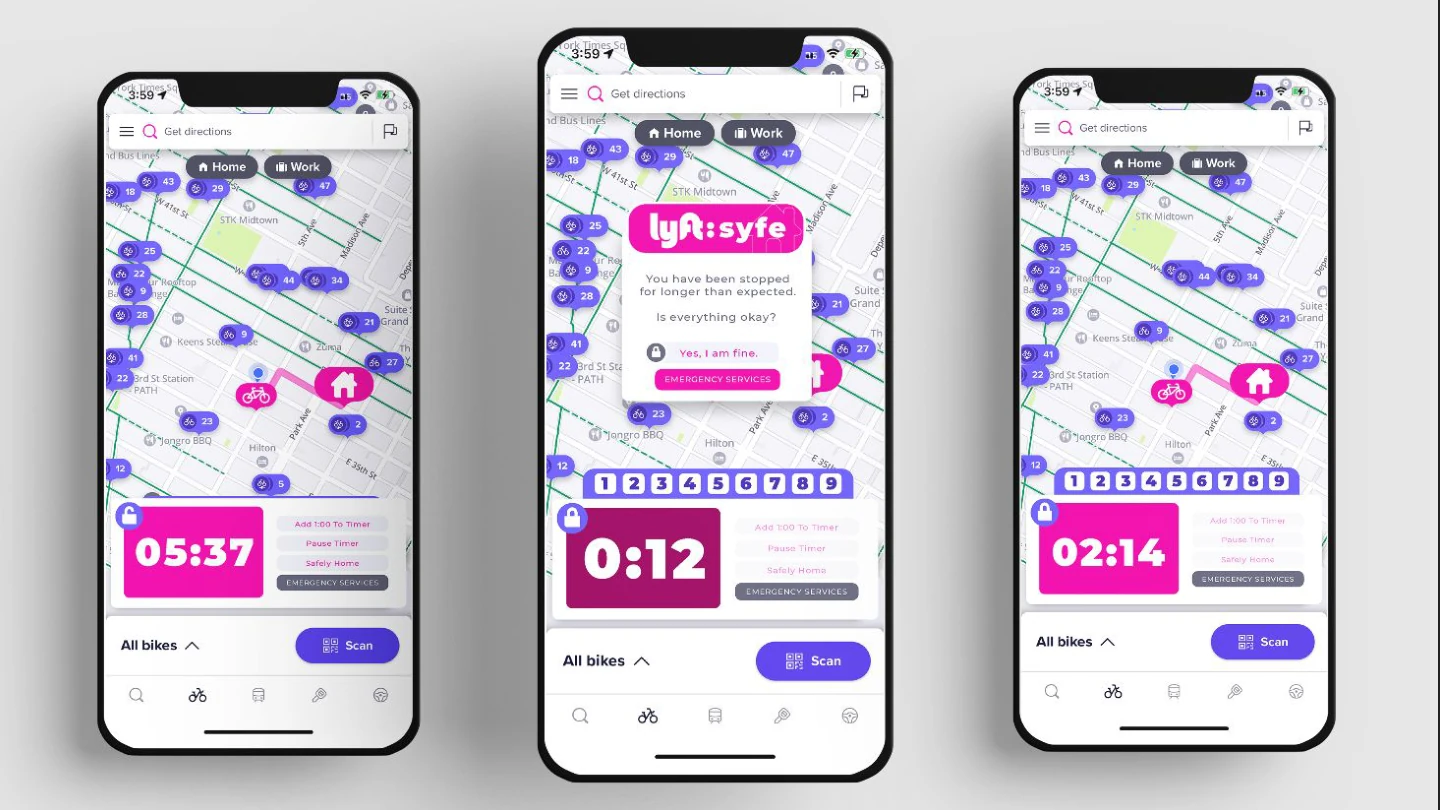
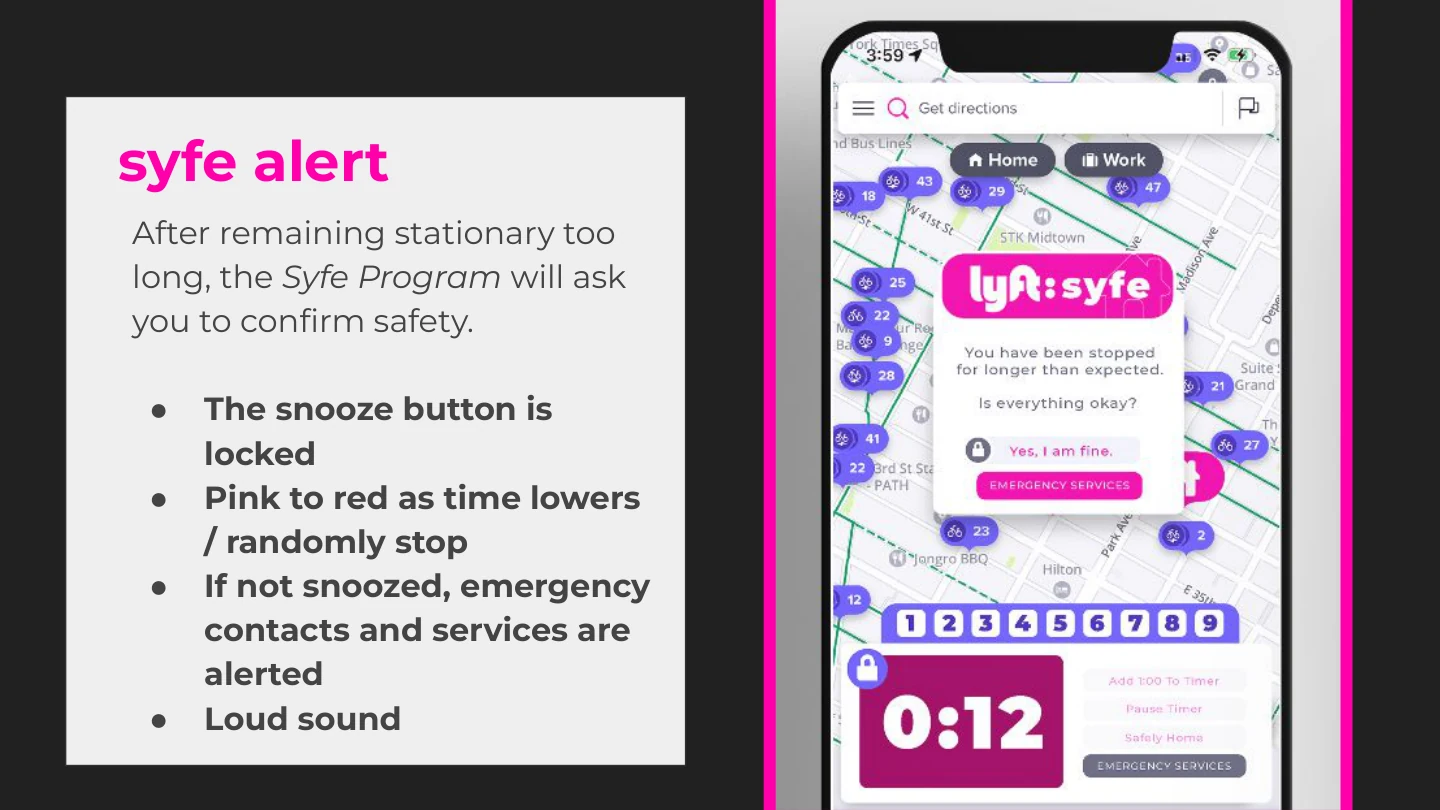
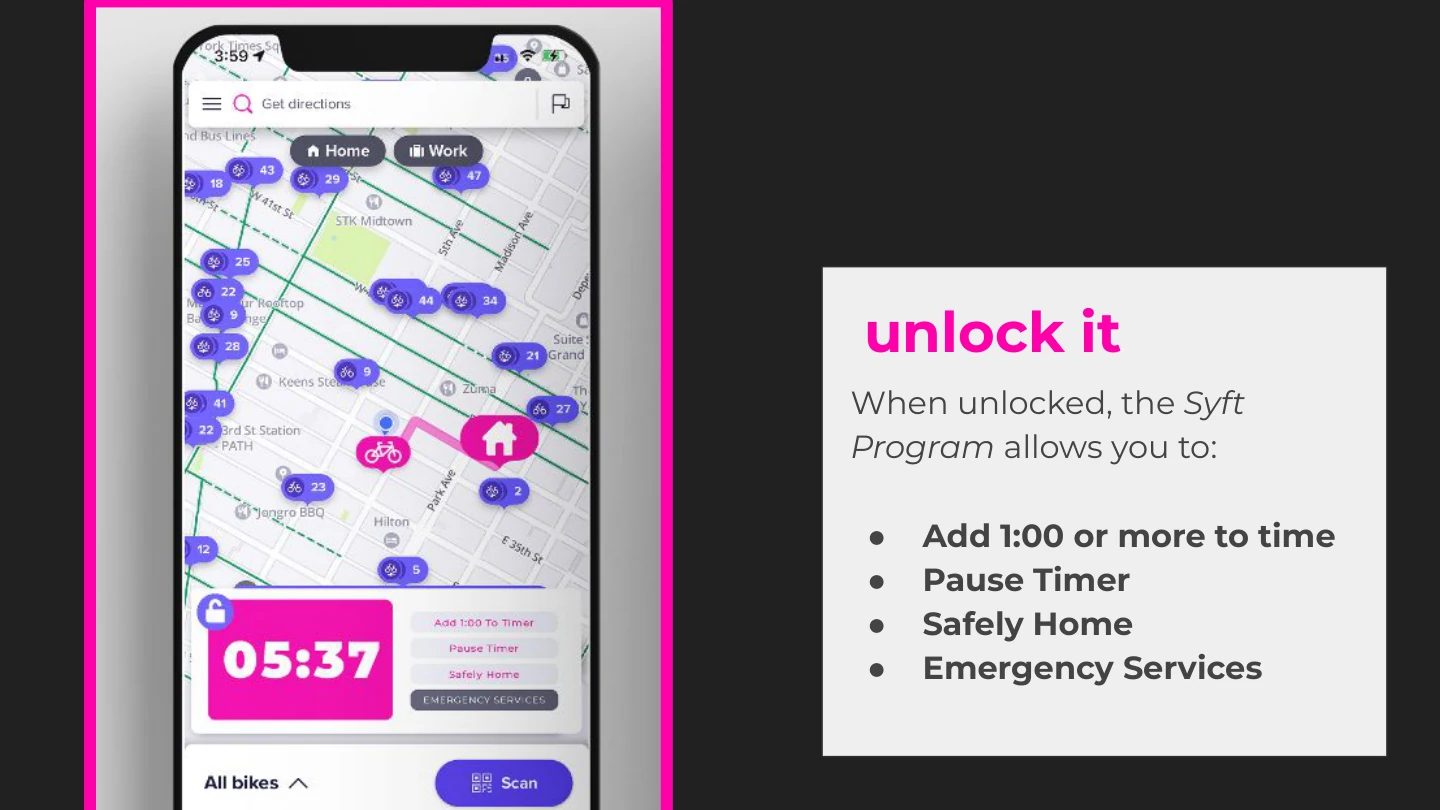
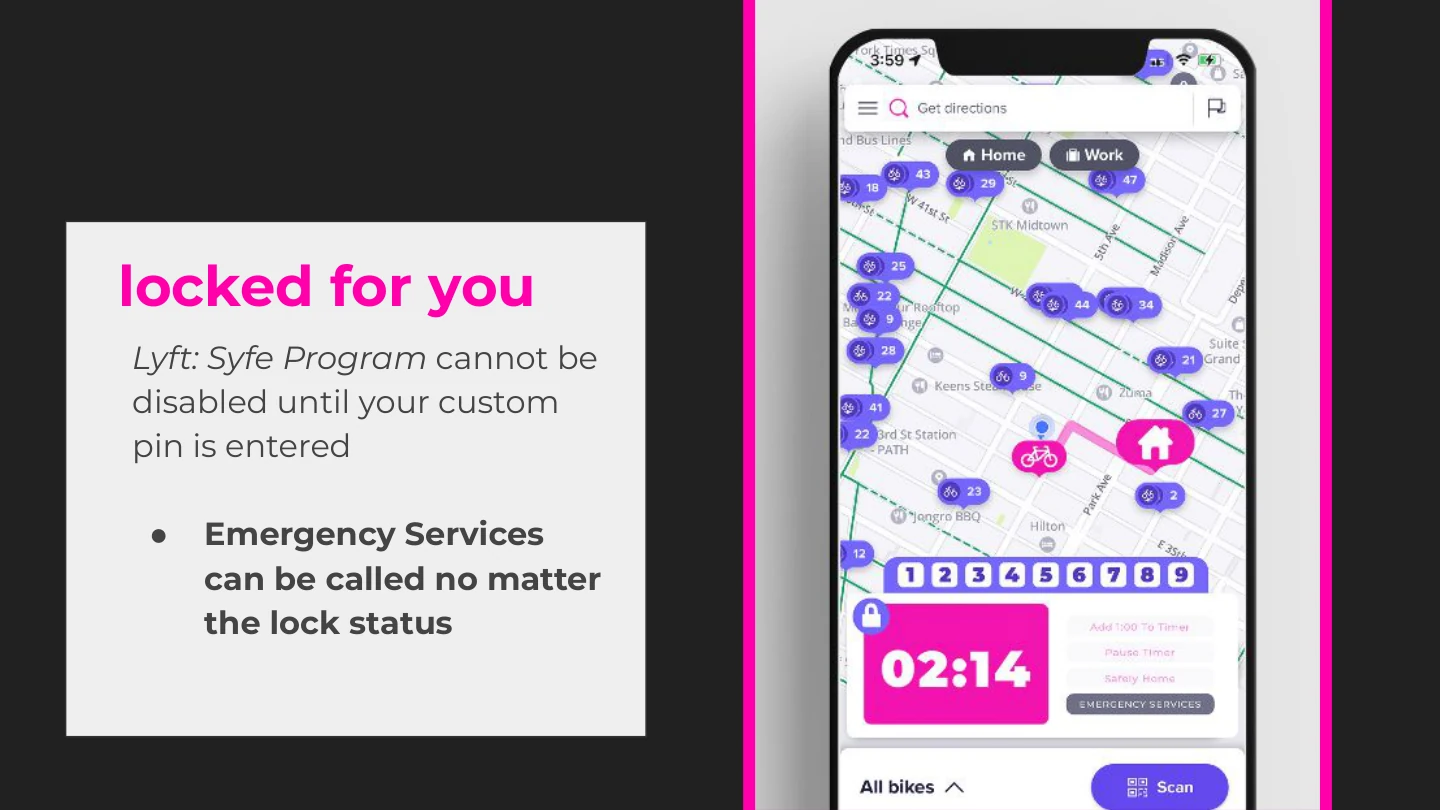
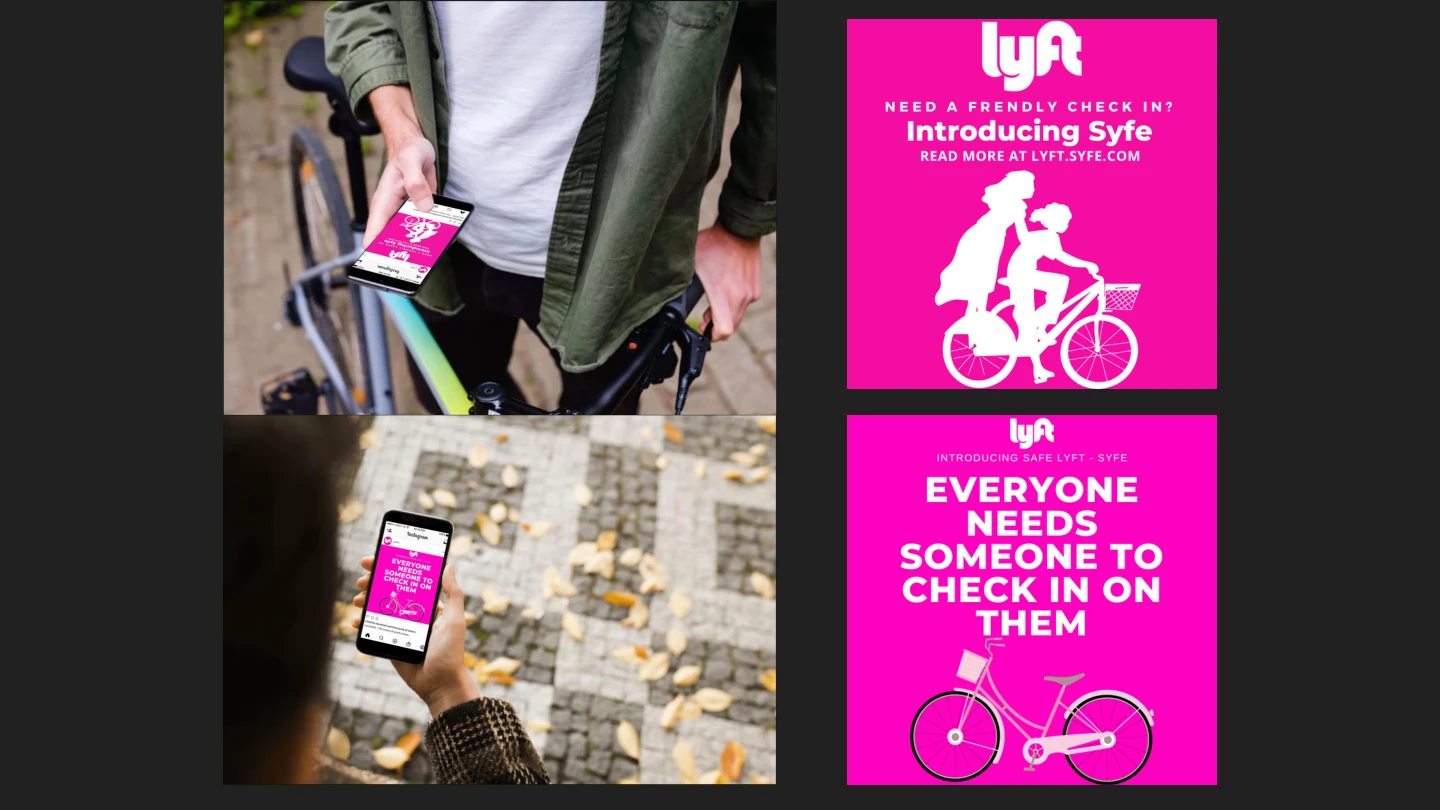
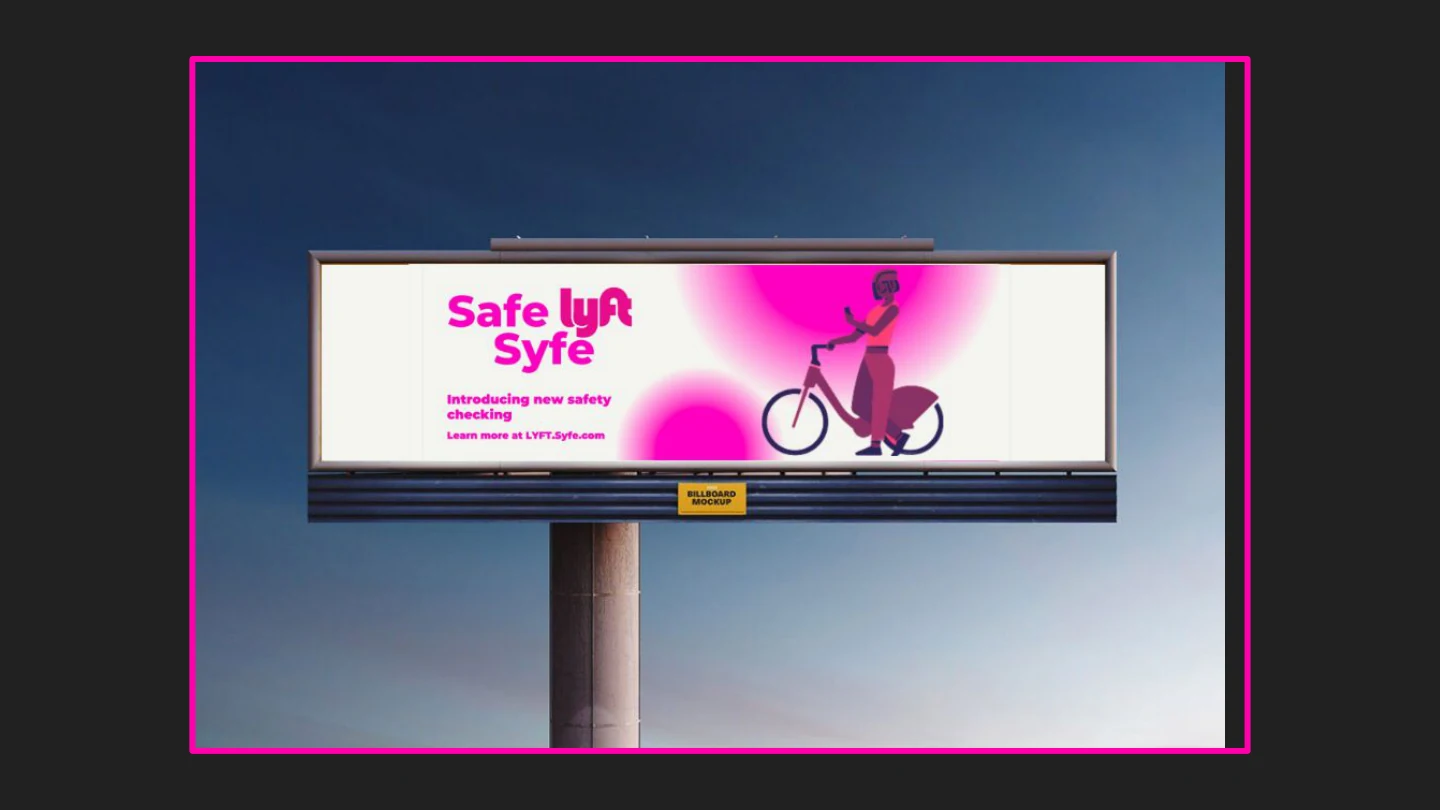
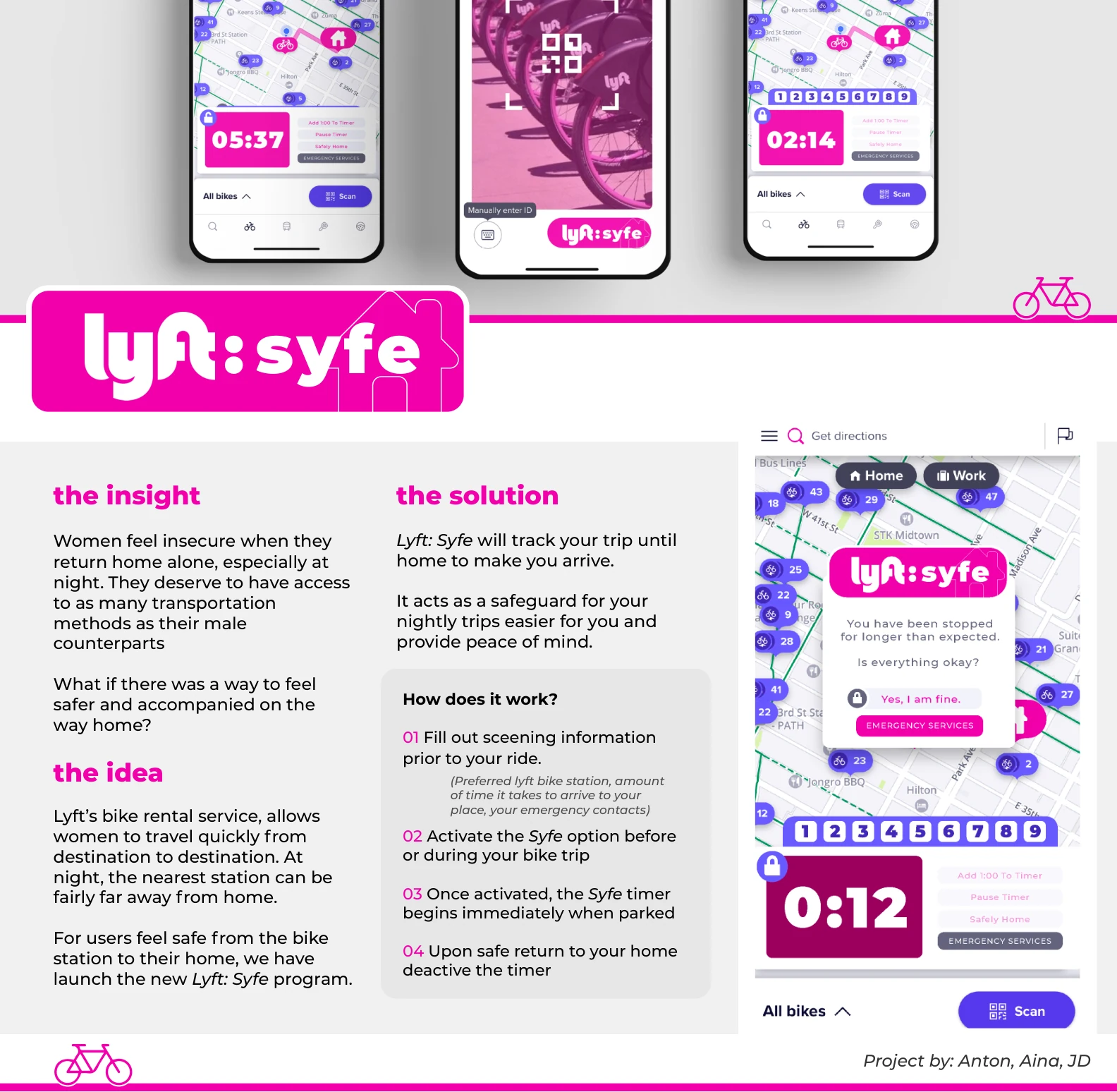
Syfe proposes a timed check-in that begins when a bike is parked. The interface sequence explores route progress, arrival confirmation, a PIN-protected timer and emergency-contact controls. Pink and white layouts connect the service idea to Lyft’s visual language; social posts and a billboard make the promise immediately visible. These are interface and campaign mockups, rather than a functioning safety service.
Development / The thinking in motion
Developing the journey beyond the ride
The team connected a simple arrival ritual—letting someone know you got home—to the gap between docking a shared bike and reaching the front door.
Make the service concrete
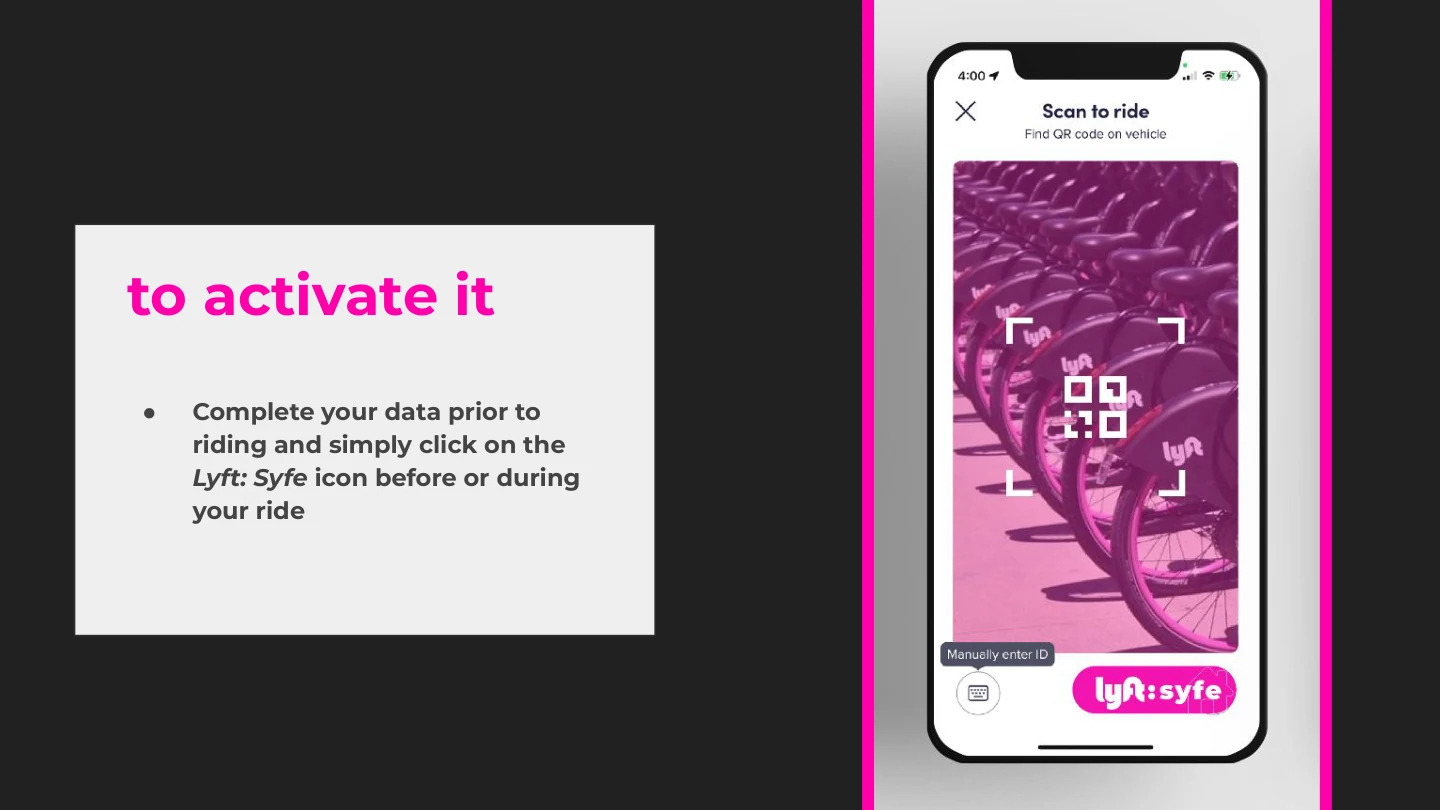
The proposal maps the idea into a series of decisions: set a usual station, journey time and emergency contacts; activate Syfe; then start a timer when the bike is parked. Arrival, extra time, PIN protection and emergency actions appear as distinct interface states.
Give the idea a public face
Lyft-pink interface mockups sit alongside social and outdoor applications. The final board condenses the same service into a short insight, idea and four-step explanation.
Team project: Anton, Aina and JD, as credited on the final board. This shows the concept’s structure and presentation. It does not establish a tested app, a launch or a documented sequence of feedback-driven revisions.